BROAD OPPORTUNITIES FOR YOUTH: EDUCATION AND DEVELOPMENT
21.09.2026 Поделиться“YESTERDAY AND TODAY”
During the years of independence, as in all areas of life in our country, large-scale changes have taken place in the healthcare system. This process has been important not only for improving the quality of medical services but also for improving the system of training personnel with modern knowledge and skills. Looking at the changes in medicine today, the difference between yesterday and today can be seen above all in education, technology and the opportunities created for young people.
Medicine has always held a special place as a profession requiring deep knowledge and high responsibility, directly linked to human life. However, as times have changed, so have the requirements for doctors and medical specialists. Today, a medical student is expected not only to master theoretical knowledge but also to acquire practical skills, develop clinical thinking, analyze scientific data, use digital technologies and adopt modern medical approaches.
Today, reforms aimed at taking medical education in our country to a qualitatively new level are continuing steadily. Particular attention is paid to developing practical skills and aligning educational programmes with international standards.
According to the new approaches announced in September 2026, the General Medicine programme is planned to be transformed into a six-year “General Medicine” programme based on the 5+1 model, combining five years of theoretical and practical training with one year of continuous clinical practice. This approach aims to train qualified specialists with modern knowledge and practical skills.
It is hard to imagine modern medicine without advanced technology. Diagnostics, laboratory research, medical information systems and digital technologies are becoming an essential part of medical practice, and this is also influencing medical education. Today’s students need the skills to work with modern laboratory equipment, information technology and scientific data.
The changes in the country’s medical education system are also reflected in the regions. Young people studying at Karakalpakstan Medical Institute are gaining knowledge and skills in various fields of modern medicine and preparing to take their place in the healthcare system.
In particular, involving students in research, developing their digital skills and combining professional knowledge with practice are among the key aspects of today’s learning process at the institute. Today’s student’s opportunities are not limited to the classroom: they can take part in scientific conferences, conduct research, work with modern information sources, study foreign experience and choose their professional path early.
Today a doctor or medical specialist must know modern technologies, be able to analyze scientific information, have practical skills and constantly update their knowledge. The reforms aimed at further improving medical education in our country serve exactly this purpose — training modern and competitive medical personnel.
Today’s student belongs to the generation that will contribute to the medicine of tomorrow. Their knowledge, research and sense of responsibility for their profession are among the key factors in the development of the field.
I am glad to be studying in a time of such broad opportunities and great changes. Today we, the young generation, have all the conditions we need to gain solid knowledge, conduct research and realize our potential. These opportunities are a solid foundation not only for becoming mature specialists but also for contributing to the medicine of the future.
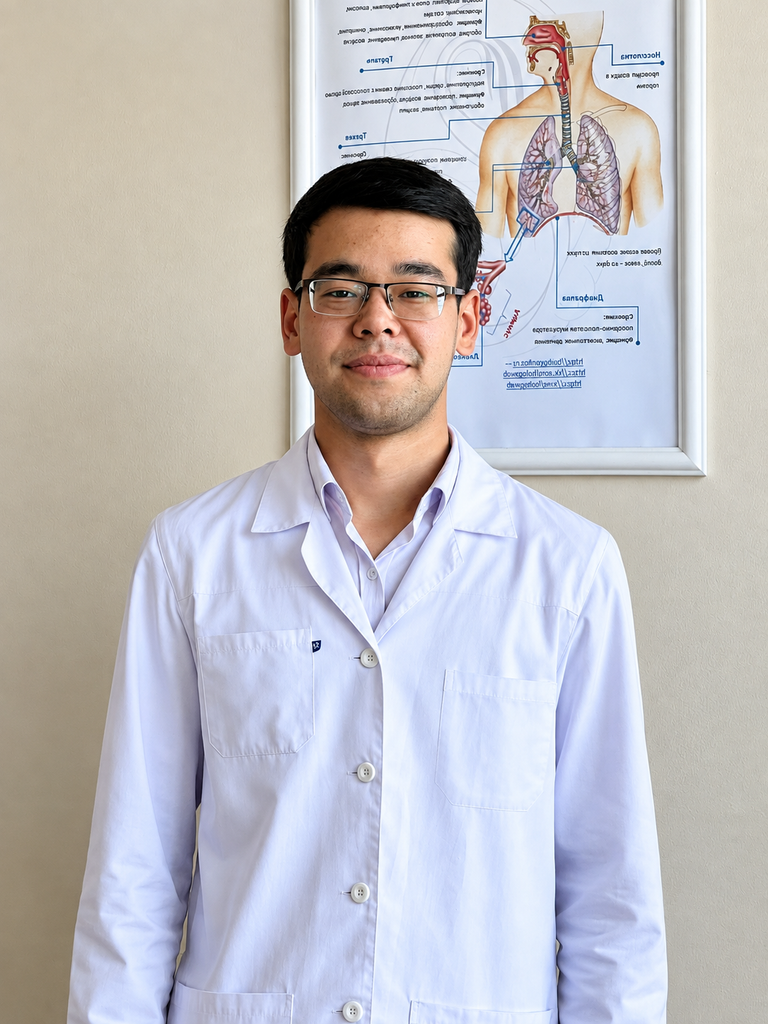
ODILOV DIYORBEK DILSHOD O‘G‘LI
4th-year Medical Biology student, Karakalpakstan Medical Institute